Why Replacing Missing Teeth Matters
Some patients delay treatment if the missing tooth is not visible. However, replacing missing teeth is important for more than just appearance.
When a tooth is missing:
- Neighboring teeth may shift out of position
- Bite alignment can change
- Jawbone loss may occur
- Chewing efficiency may decrease
Early treatment often helps prevent more complex dental issues in the future.
What Is a Dental Bridge?
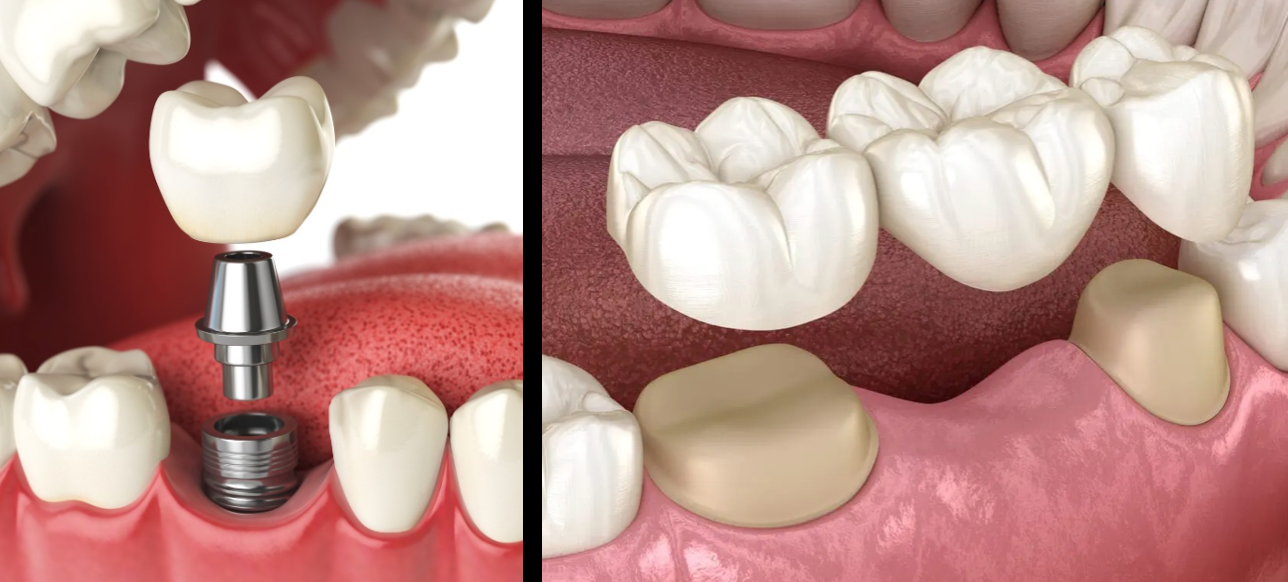
A dental bridge is a fixed restoration used to replace one or more missing teeth by “bridging” the gap between two healthy teeth. The process typically involves placing crowns on the teeth adjacent to the missing space (called abutment teeth), with an artificial tooth (pontic) attached between them.
Dental bridges are a well-established treatment option and can usually be completed within a few weeks. Because they rely on existing teeth for support, bridges do not require surgery, making them a practical choice for patients who prefer a less invasive procedure.
Benefits of dental bridges include:
- Faster treatment timeline compared to implants
- No surgical procedure required
- Effective restoration of chewing and appearance
However, bridges do have some limitations. Preparing the surrounding teeth requires removing a portion of healthy enamel to place crowns. Additionally, because the bridge does not replace the tooth root, the jawbone in that area may gradually shrink over time.
What Are Dental Implants?
Dental implants are a more advanced and long-term solution for replacing missing teeth. A dental implant consists of a small titanium post that is surgically placed into the jawbone, acting as an artificial tooth root. Once the implant integrates with the bone through a natural process called osseointegration, a custom crown is placed on top to restore the visible portion of the tooth.
Because implants replace both the root and crown of the tooth, they closely mimic natural tooth structure and function.
Benefits of dental implants include:
- Preservation of jawbone structure
- No need to alter neighboring healthy teeth
- Exceptional stability and durability
- Natural look and feel
Dental implants generally require a longer treatment timeline due to healing periods between stages. However, when properly maintained, they can last for decades.
Key Differences Between Implants and Bridges
While both options effectively replace missing teeth, several factors distinguish dental implants from bridges:
- Longevity:
Dental implants are designed to be a long-term solution and often last significantly longer than bridges. Bridges may need replacement after 10–15 years, depending on wear and oral health.
- Impact on Surrounding Teeth:
Bridges rely on adjacent teeth for support, which requires modifying otherwise healthy tooth structure. Implants stand independently and do not affect neighboring teeth.
- Bone Health:
Because implants replace the tooth root, they stimulate the jawbone and help prevent bone loss. Bridges do not provide this benefit.
- Treatment Timeline:
Bridges typically require fewer appointments and no surgical healing time. Implant treatment takes longer due to the integration process but offers long-term structural advantages.
- Cost Considerations:
Implants often involve a higher upfront investment, while bridges may have a lower initial cost. However, the long-term durability of implants may make them more cost-effective over time.
Which Option Is Right for You?
There is no one-size-fits-all solution when it comes to replacing missing teeth. The best choice depends on several factors, including bone health, the condition of surrounding teeth, overall medical history, and personal preferences regarding treatment timeline and budget.
Some patients are excellent candidates for dental implants, while others may benefit more from a dental bridge. In certain cases, additional treatments such as bone grafting may be recommended to support implant placement.
The most important step is a personalized evaluation. Digital imaging and a comprehensive exam allow your dental team to assess your oral health and discuss the advantages of each option based on your unique situation.
Schedule a Consultation to Learn More
Every smile is unique, which is why a personalized consultation is the best way to determine the right solution. Factors such as bite alignment, bone levels, existing restorations, and long-term goals all influence treatment recommendations.
At Amaze Dental in Kirkland, we use digital imaging and comprehensive exams to help patients fully understand their options. If you are exploring options to replace missing teeth, our team is here to help guide you through the process. We focus on providing clear information, personalized recommendations, and comfortable care so you can feel confident in your treatment decisions.
Contact our office today to
schedule a consultation ↗ and learn whether dental implants or a dental bridge may be the best solution for restoring your smile.