
Long In The Tooth?

December 18, 2015

We've probably all heard the saying "long in the tooth" which is usually a way of describing getting on in years.

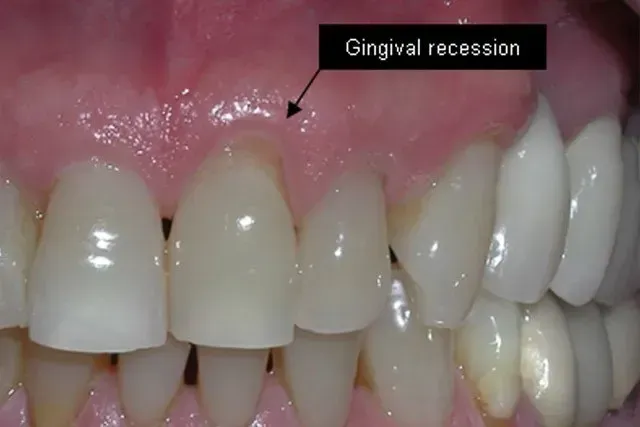
A close up of a person 's teeth with a sign that says gingival recession.

Sometimes sayings have little relationship to what they are describing, but actually this is very descriptive of a dental condition that is called "gingival recession". Gingival recession leads to excess root exposure that is normally covered by gum tissue. The root of the tooth is what stabilizes the visible crown in your mouth. If your gums begin to recede and expose the root surfaces, quite a few things may happen.

  • Your teeth will become very sensitive to cold or sweets
  • Your teeth will lose their youthful appearance as spaces will develop between the teeth where the gum used to be
  • Because the root surfaces are much softer than enamel, they are very prone to decay
  • For the same reason these root surfaces will wear down quickly even from brushing one's teeth
  • Many times the root surfaces are darker than the enamel and will appear discolored. They are also more porous than enamel and they will pick up stains faster from things like tea and coffee and especially smoking.


What causes gum recession?

  • Teeth that are crooked and out of alignment
  • Aggressive brushing of one's teeth
  • Grinding your teeth either during the day or at night
  • Lip piercings that rub against teeth
  • Habits like picking at your gums with your fingernail or a file
  • There is also a genetic component and if your parents have recession, unfortunately you might be more prone
  • Poor dental work where crowns or fillings have gaps that lead to bacteria buildup


Recession can be treated and sometimes completely corrected. We can place topical agents on the root surfaces to desensitize them. If the surfaces are very worn or decayed we can bond tooth colored filling material to them and make them almost as hard and esthetic as healthy enamel. When the recession is highly unaesthetic; but the root surfaces are healthy, we can sometimes surgically change the level of the gum and cover the roots. Many things can be done surgically from covering the roots completely to simply placing some "tough" gum in these areas to stop further recession.


So don't let someone calling you "long in the tooth" or just feeling that way cause you despair because there usually is something we can do to help you gain your comfort and confidence back.

Subscribe to Dr. Annie's newsletter

Latest Articles

By Dr. Annie Mazure-Schmidt April 6, 2026
If you notice pink in the sink after brushing, you're not alone — but bleeding gums are never something to ignore. Let’s discuss what your body is trying to tell you. Occasional gum bleeding can feel alarming, but for many patients, it's also easy to dismiss. The truth is somewhere in between: bleeding gums are common, but they're not normal. It is a signal that something is off, and the good news is that most causes are very treatable when caught early.
By Dr. Annie Mazure-Schmidt March 2, 2026
If you are missing one or more teeth, modern dentistry offers several reliable solutions to restore your smile and oral function. Two of the most common options are dental implants and dental bridges. While both treatments can improve appearance and chewing ability, they differ in structure, longevity, and overall approach. At Amaze Dental in Kirkland, we believe patient education is essential to making confident decisions about dental care. Understanding the key differences between dental implants and bridges can help you determine which option may be right for your needs.
Woman smiling, looking at her teeth in a dental mirror in a dental office setting, pink bib, blue shirt.
By Dr. Annie Mazure-Schmidt February 1, 2026
A bright, white smile is often associated with health, confidence, and youth. It’s no surprise that teeth whitening remains one of the most popular cosmetic dental treatments today. While many people seek whitening to address overall yellowing or staining, a common and sometimes more concerning issue is discoloration affecting just one tooth. Understanding why this happens, how whitening works, and which treatment options are appropriate is key to achieving safe, predictable results.
Show more articles

Share this article