The jaw is small at this time, but usually there is plenty of room for these teeth.As one grows older these baby teeth are replaced by adult teeth and later the permanent "molars" come in behind the baby teeth. Obviously this takes more room in the mouth. There are ultimately 32 permanent teeth which means there are three molars at each corner of the mouth. We dentists name them, but also refer to them by numbers.
Wisdom teeth, which most people have heard of and which resonates with " I need to remove them" are the third molars and the furthest back of all the teeth. You now can understand that these third molars sometimes are so far back that the jaw is not big enough to allow them to come in correctly. It is like a two gophers trying to come up thru the same hole. One will win and the other one is stuck below. Well, the wisdom tooth is always the last one to come in and 80% of the time it is stuck to some degree. That is the scenario we as dentists deal with and will come up with a disgnosis and a plan to either remove the third molars or leave them.
The philosophy at our office is that if there is room for the third molars and they can be cleaned effectively, we will simply leave them as is. Sometimes the wisdom teeth quit erupting and are so deeply and firmly inbedded in the jaw it does not make sense to take them out. Again, we leave them. They will do little damage to any other teeth.
Usually though, the wisdom teeth come in at an angle and are caught or "impacted" behind the second molar which will be damaged in time by the force of the eruption of the wisdom teeth. These third molars now must be removed. We will determine the severity of the problem and the best time to remove the offenders . The earlier they can be removed ( 16 or after) usually the better as they come out much more easily, but only if they are not too deep. Sometimes we have to wait until early twenties if they erupt slowly and it will make the surgery easier because of their proximity to the surface.
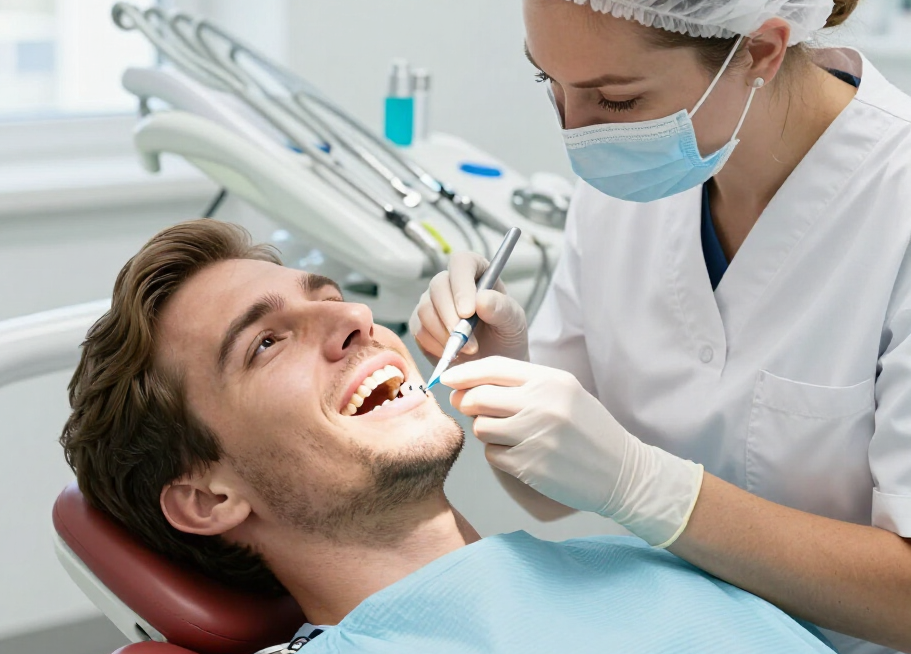
We have removed hundreds of wisdom teeth at our office and have stereo headphones and nitrous oxide ( laughing gas) to make the treatment as pleasant as possible. Sometimes if there is a bad gum infection from the wisdom teeth being in too long or they are way too deeply impacted we will refer the case to a board certified oral surgeon. Please feel free to call my office and we will be happy to discuss any questions you have or aid in the diagnosis of why "my wisdom teeth hurt".